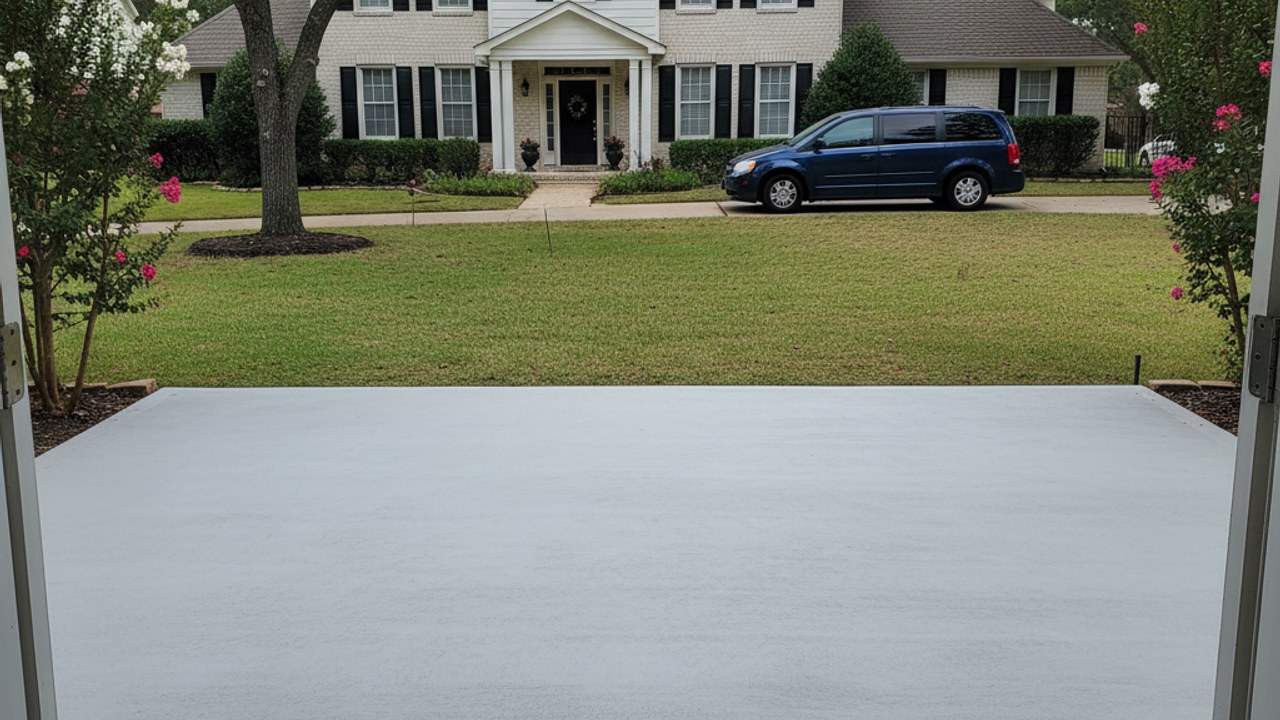
Concrete looks simple once it's down. Gray, flat, done. What happens before the truck shows up is where most of the problems either get solved or get built in for good. Lubbock has its own list of things worth checking first, because the ground here, the weather here, and the way the city handles permits are not the same as they are two hours away in Midland or four hours away in Dallas.
What's actually under your yard
Call 811 before anyone digs, full stop. Gas lines, irrigation, buried cable, all of it gets marked for free and it takes a couple of days. Skip it and you're paying to repair a line, not just a slab.
Past the marked lines, the next thing is caliche. A lot of Lubbock lots sit on a layer of it, a hard, chalky calcium carbonate crust that can start anywhere from a foot down to three feet, depending on the part of town. It doesn't compact the way regular soil does, and in older neighborhoods it sometimes shows up right where you need to dig footings for a porch or a pad. If your contractor hits it, that changes the excavation plan, and it should change the bid too, not get absorbed as a surprise later.
On older streets, like Tech Terrace or around Clapp Park, you'll also find shallow clay sewer lines and mature trees with roots that have already found the water under an old driveway slab. Those roots are usually why the old slab is heaving or cracked in the first place, and cutting the roots without talking to an arborist first can hurt a tree that's been there sixty years.
Where the water actually goes
Lubbock is flat, and a lot of it drains toward low spots and playa lakes rather than storm sewers. That matters for concrete because a driveway or patio poured dead level, or worse, sloped toward the house, will hold water against your foundation every time it rains. The fix is simple on paper: a slope of about a quarter inch per foot, away from the structure. It's one of the easiest things to check before the forms go in, and one of the most expensive things to fix after.
Clay-heavy soil here also swells when it gets wet and shrinks hard in a dry summer. That movement under a slab is a big reason older driveways and sidewalks develop that stair-step crack along one edge. A good base of compacted road base or crushed limestone under the new concrete, usually 4 to 6 inches, gives the soil somewhere to move without taking the slab with it.
What the permit actually covers
A new foundation in Lubbock gets a permit through the city, no way around it, and it gets inspected at the footing stage before any concrete goes in. A driveway or sidewalk that touches the public right-of-way usually needs a permit too, because the city has to check it doesn't block a sightline or sit on top of a water meter. A patio that isn't attached to the house and isn't in the right-of-way often doesn't need one at all. The honest answer is that it depends on what you're building and exactly where the property line sits, which is also why a quick check of your plat or survey before you start saves an argument later.
If you're in a newer subdivision, southwest Lubbock or out toward Frenship for example, there's a decent chance you're in an HOA, and HOAs can have their own rules about driveway color, stamped patterns, or where an RV pad can go. Older central neighborhoods mostly don't have that layer. Worth a five-minute phone call before you commit to a design.
The spec matters more than the price
Two bids for the same driveway can differ by a few thousand dollars, and the difference is usually in what's not visible. A standard residential driveway runs 4 inches thick; one that's going to carry an RV, a dually, or a loaded equipment trailer should be closer to 5 or 6 inches with steel reinforcement, not just fiber mesh. Mesh helps control shrinkage cracking. It does nothing for the kind of structural crack you get from real vehicle weight on soft base. Ask which one is in the bid and why.
Control joints are the other thing worth asking about directly. Concrete is going to crack somewhere, it's just a question of whether it cracks where you told it to or wherever it wants to. Joints should be cut roughly every 8 to 10 feet for a driveway slab, and they need to go in within about 24 hours of the pour, before the slab has decided on its own. If the plan doesn't mention joint spacing at all, that's a gap worth closing before the truck arrives, not after.
A few things people forget until it's too late
- Truck access. A standard concrete truck is heavy and wide. If it has to cross an existing driveway, a narrow alley, or soft ground to reach the pour site, say so up front, because that can mean a pump truck instead, and that's a different cost.
- Isolation joints against the house. Anywhere new concrete meets an existing foundation or an old slab, there should be a joint, usually a strip of asphalt-impregnated board, so the two sections can move independently. Without it, the new pour can crack the old one or pull itself apart against it.
- What's already failing nearby. If you're replacing one section of a cracked sidewalk, check whether the sections next to it are on the same slow slide. Patching one square and leaving the next one heaving rarely holds up for long.
- Cure time before load. New concrete can usually take foot traffic in a day or two but shouldn't see a vehicle for at least 7 days, and full strength takes closer to 28. Lubbock's summer heat speeds the surface cure and can make it look ready before it actually is underneath.
None of this is complicated, but it's easy to skip when you're mainly thinking about the finish and the color. Get the ground, the water, the permit, and the spec right first, and the finish takes care of itself. If you want someone to walk the site and point out which of these actually apply to your lot before you sign anything, that's the kind of conversation we have every week doing concrete contractor work around Lubbock.