What We Do

Services

Here's the full list of concrete work we handle, from small repairs to full driveway pours.

HomeServices

Everything we take on

Every job below is one we do ourselves across Lubbock.

Concrete Driveways

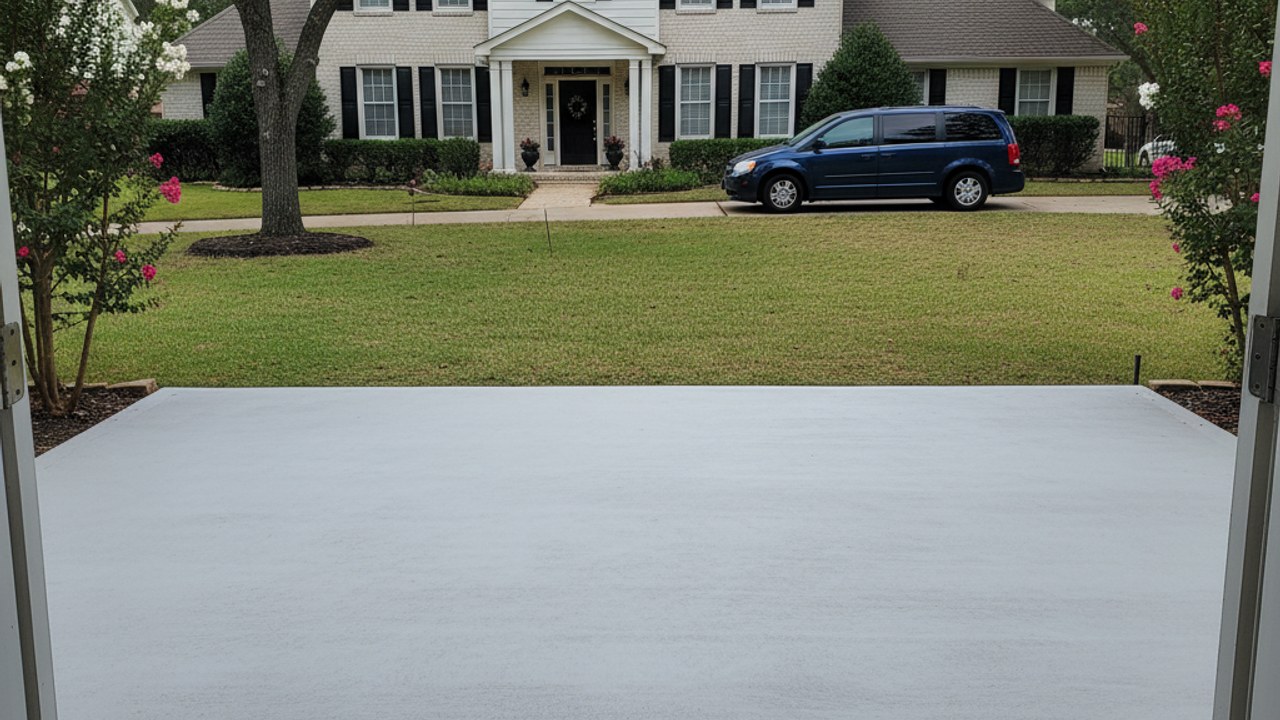
A driveway takes the most abuse of any slab on your property, tires turning in the same spot, trucks parked overnight, de-icer in a bad winter. We run 4 inches of concrete minimum over compacted base rock, with rebar instead of mesh for anything wide enough to carry a vehicle. We cut control joints the same day we finish so the slab cracks along the joint, not across the middle of your driveway.

Concrete Patios

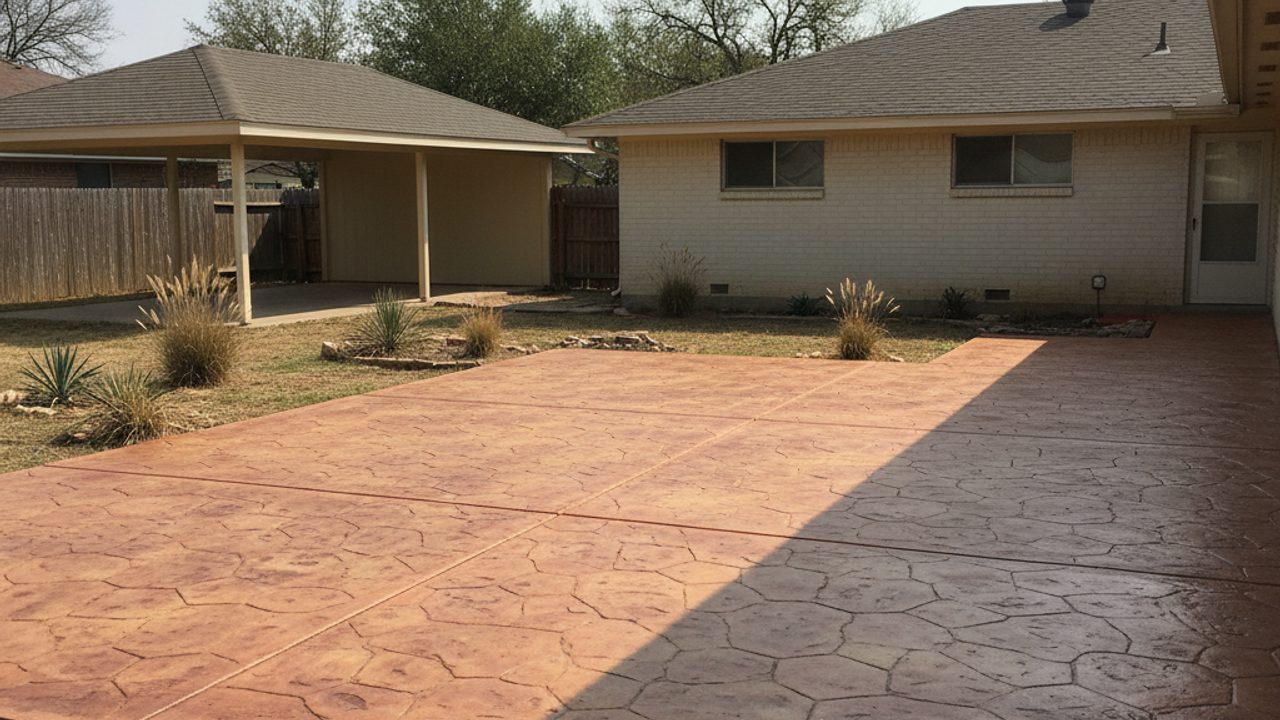
Patios need to slope away from the house, about a quarter inch per foot, or you'll be dealing with water at your back door after every storm. We can leave the finish broom-swept plain or add color and a stamped pattern if you want something closer to stone. Either way, we set the forms and check the pitch before we ever mix a truck.

Stamped Concrete

Stamped concrete gets you the look of flagstone, brick or slate without individual pavers to level or weeds coming up between joints. We color and stamp while the concrete is still plastic, which gives us maybe an hour before that window closes. It costs more than a plain broom finish, but a lot less than real stone laid piece by piece.

Concrete Repair

Not every cracked slab has to come out. A hairline crack that isn't moving can usually be routed and filled, but a slab that's heaved or settled more than an inch is a tear-out. We'll tell you which one you've got before we quote the job, not after.

Concrete Sidewalks

Sidewalks get less thickness than a driveway, usually 3 to 4 inches, but they still need a compacted base or they'll heave with the clay just like anything else. We match the score pattern and joint spacing to whatever's already on the property so a repair section doesn't stick out.

Concrete Foundations

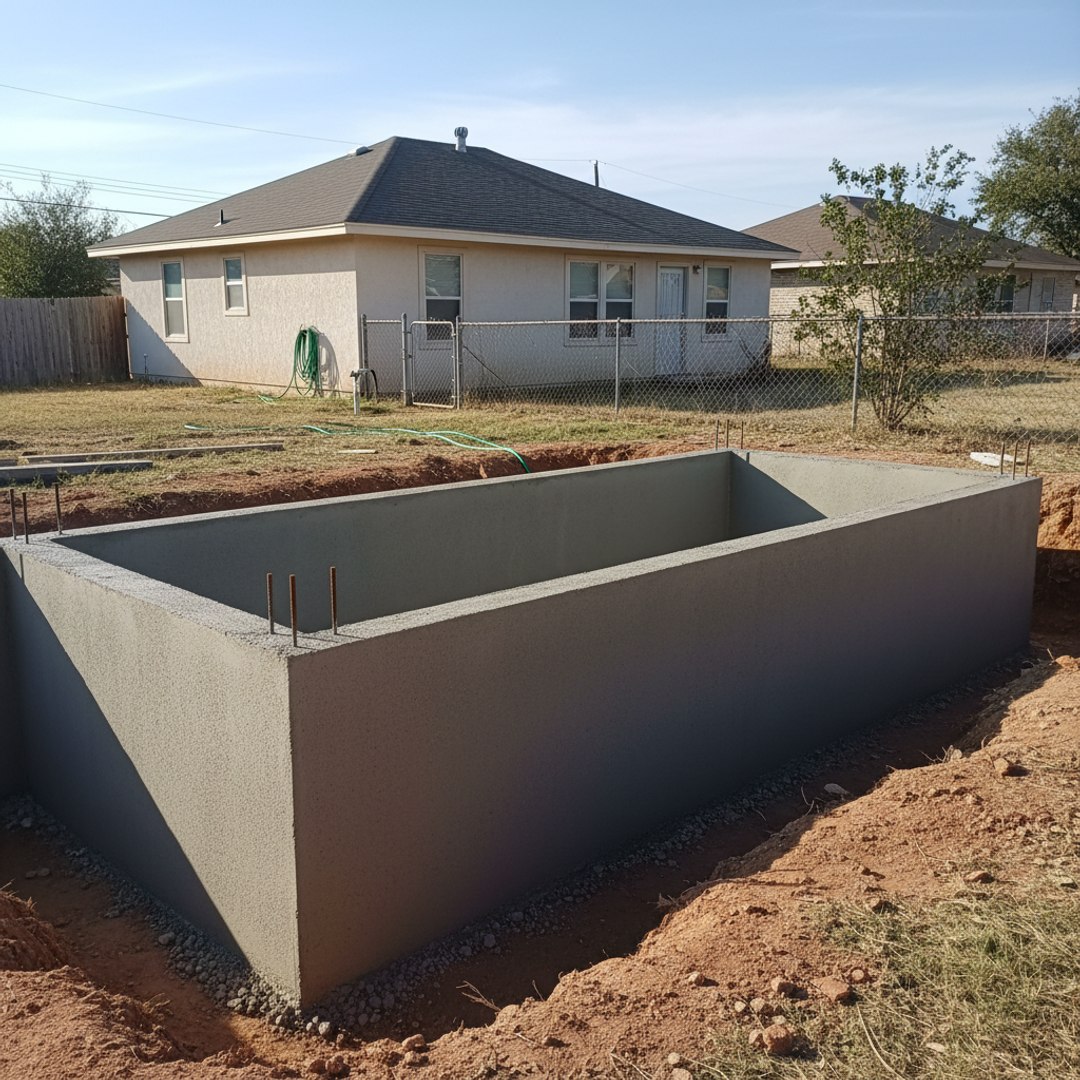
We pour slab foundations for sheds, small additions and detached garages. A level, properly compacted footing matters more here than anywhere else, since everything built on top depends on it staying flat. We check grade with a laser level, not a guess.

Concrete Steps & Porches

Steps have to meet a consistent rise and run or somebody trips on the one that's different. We form and pour steps and small porches to match the slope of the yard and the height of the door threshold, and we broom or stamp the finish to match the rest of the property.

Decorative Concrete Overlays

If the slab underneath is still structurally sound but ugly, cracked at the surface or just dated, an overlay can resurface it without a full tear-out. It's a thinner layer bonded to the old concrete, colored or stamped to look new. It won't fix a slab that's actively heaving, and we'll say so if that's what we find.

RV & Equipment Pads

A gravel pad works until the first rain turns it to mud under your RV or tractor. We pour a reinforced slab sized to whatever you're parking on it, with the base compacted to carry that weight without settling on one corner.

Concrete Removal & Replacement

Sometimes the fastest fix for a slab that's cracked in six places is to break it out and start over. We saw-cut and remove the old concrete, haul it off, and re-grade the base before we pour again. It costs more up front than patching, but a patched slab with bad base underneath will crack again within a couple of years.

How It Works

Four steps, and no surprises in any of them.

01

We come and look

You tell us what you want doing, we look at what is actually there, and we ask the awkward questions early.

02

You get a price

In writing, itemised, free. If something might add cost later we flag it now rather than at the end.

03

We do the work

Same crew throughout. We cover your floors, keep the dust down and tidy up before we leave each day.

04

We walk it with you

You point out anything you are not happy with and we fix it before the invoice, not after.

Where We Work

All of this, across Lubbock, TX

We haul concrete trucks and crews to Lubbock and the towns around it.

Lubbock, TX
Levelland, TX
Slaton, TX
Brownfield, TX
Wolfforth, TX
Shallowater, TX
Post, TX
Abernathy, TX
Tahoka, TX
Idalou, TX
New Deal, TX
Common Questions

Things worth asking

Questions that usually come up once a project's underway.

Do I need a permit to pour a new driveway or patio?
Many cities, including Lubbock, require a permit for new driveway approaches or additions that affect drainage or property lines, while a simple patio replacement in the same footprint often doesn't. Permit requirements vary by city and by whether the work ties into a public sidewalk or street, so confirming with the local building department before pouring is worthwhile.
How long does a typical concrete job take?
Forming and pouring a standard driveway or patio usually takes one to two days, but the concrete requires about 24 to 48 hours before foot traffic and a full 7 days of curing before it can handle a vehicle. Full strength takes closer to 28 days, though most of that happens after the slab is already usable for lighter use.
Can concrete work stay within a specific budget?
Yes, adjusting slab size, finish type or reinforcement can bring a project closer to a target budget, and a contractor should say upfront what gets cut to hit a number. Reducing thickness below what a driveway requires to carry vehicle weight isn't a safe way to save money, though, and a reputable contractor will say so.
Is the concrete work guaranteed?
Workmanship issues, like an improperly formed slab or joints cut in the wrong spot, should be covered under a contractor's warranty for a period spelled out in the written contract. Cracking from ground movement, common in expansive clay soil, is a different issue and not something any contractor can fully guarantee against, since it depends on the soil, not the pour.
Who will be the main point of contact during the job?
On most residential concrete jobs, the person who quoted the work is also the one running the crew on site, which keeps communication direct instead of routed through an office. Any changes to scope or schedule should come from that same point of contact.
What kind of concrete mix gets used?
Most residential driveways and patios use a standard 3000 to 4000 PSI mix, with the higher strength reserved for driveways carrying regular vehicle traffic. Reinforcement, whether rebar or wire mesh, matters as much as mix strength for how the slab holds up long-term.
Can the driveway or yard still be used during construction?
A driveway is blocked for at least a week between the pour and the point it can handle vehicle weight, so a second parking spot on the street or in the yard is worth arranging ahead of time. Foot traffic across a patio is usually fine after 24 to 48 hours, well before a driveway is drivable.
How should a homeowner prepare the site beforehand?
Clearing furniture, planters, vehicles and any sprinkler heads or landscaping near the work area speeds up the job and protects those items during excavation. Marking the location of buried irrigation lines isn't required from the homeowner but is helpful information to pass along.
What happens if something unexpected turns up mid-job?
Unexpected issues like a broken irrigation line, unstable soil, or an old slab thicker than expected sometimes turn up once demolition starts. Any change to scope or cost because of something found mid-job should be discussed and approved before work continues, not added to the bill afterward.
How should new concrete be cared for after it's poured?
New concrete has to stay damp and out of direct sun for the first few days if poured in hot weather, which helps it cure without surface cracking. After that, sealing every couple of years, especially on driveways exposed to de-icer or heavy sun, keeps the surface from pitting and helps stamped or colored finishes hold their look.

Not sure what you need?

Describe the problem and we will tell you what it probably is. No obligation.

Call (806) 621-8315